
If you've ever searched for ways to reduce frizz, speed up your morning routine, or make your hair more manageable, you've probably come across both Nanoplasty and Keratin Smoothing Treatments.
At first glance, they can seem very similar. Both treatments aim to reduce frizz, improve manageability, and leave hair looking smoother and shinier. However, the way they work and the results they deliver are quite different.
Let's break it down.
What is a Keratin Smoothing Treatment?
A Keratin Smoothing Treatment is designed to smooth the hair cuticle, reduce frizz, faster drying time and make styling easier.
Despite the name, it isn't designed to permanently straighten the hair. Instead, it helps relax the hair's natural texture while improving softness, shine, and manageability.
Many clients find they spend less time blow-drying and styling after a keratin treatment, with results typically lasting between 3–6 months depending on their hair type and home care routine.
Keratin Smoothing is ideal for:
- Frizzy hair
- Hair that is difficult to manage
- Clients wanting faster styling times
- Maintaining movement and body while reducing frizz
- Most hair types
What is Nanoplasty?
Nanoplasty is a newer smoothing technology that works differently from traditional keratin treatments.
Rather than simply coating and smoothing the hair, Nanoplasty uses amino acids, proteins, and other ingredients designed to penetrate deeper into the hair structure.
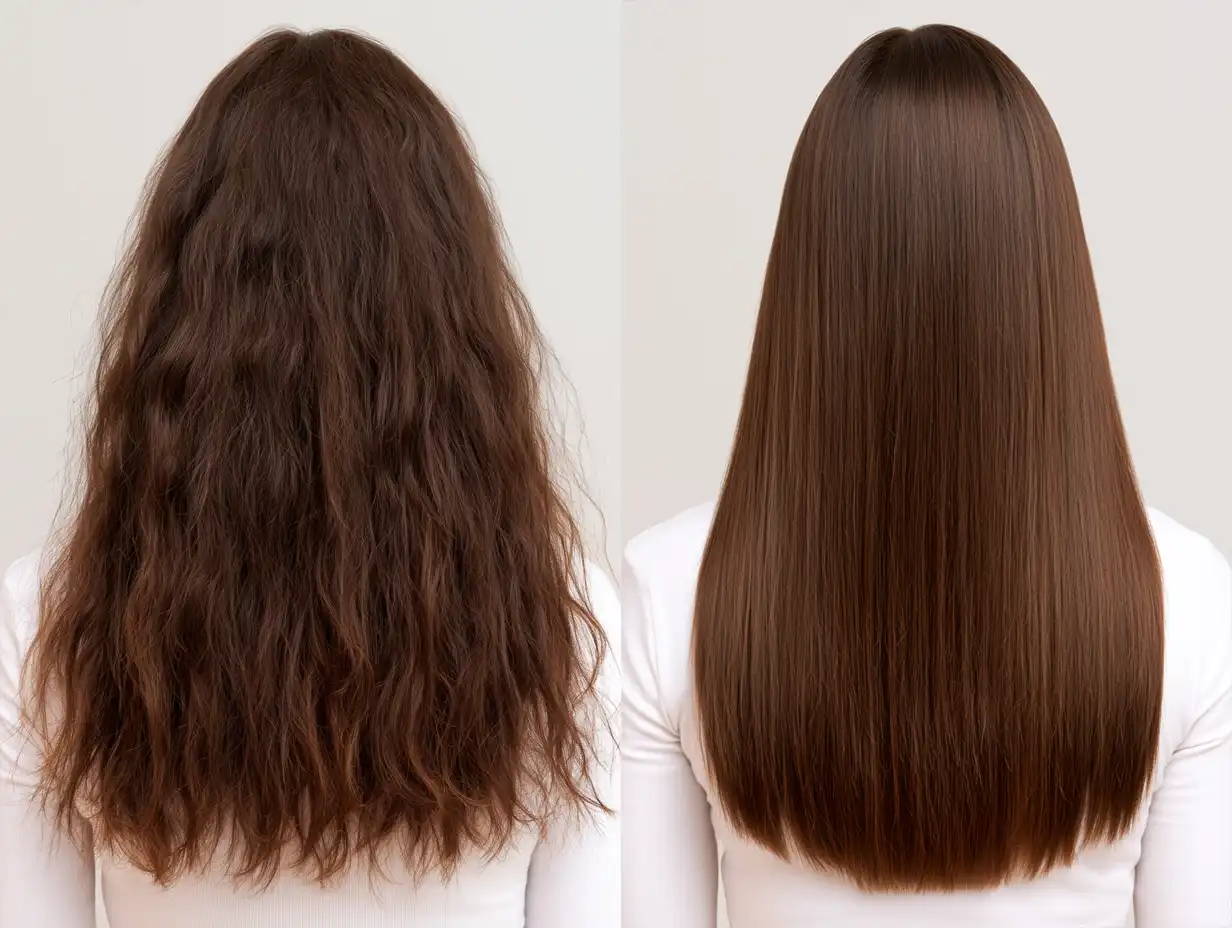
The result is often a straighter finish than a traditional keratin treatment, while still helping to reduce frizz and improve shine. Many clients describe Nanoplasty as sitting somewhere between a smoothing treatment and a straightening treatment.
Nanoplasty is ideal for:
- Very frizzy or coarse hair
- Clients wanting a straighter finish
- Hair that is difficult to control daily
- Those looking for longer-lasting smoothness
Which Treatment Leaves Hair Straighter?
This is one of the biggest differences between the two.
Keratin Smoothing
- Reduces frizz
- Softens natural texture
- Maintains movement and volume
- Does not completely straighten the hair
Nanoplasty
- Provides stronger smoothing
- Creates a straighter, flatter finish
- Significantly reduces curl and wave patterns
- Often requires less styling afterwards
If your goal is smoother, more manageable hair while keeping your natural movement, a keratin treatment is often the better choice.
If your goal is maximum smoothness and a straighter appearance, Nanoplasty may be more suitable.
What About Hair Health?
Both treatments can leave the hair looking healthier, shinier, and easier to manage when performed correctly.
However, not every treatment is suitable for every head of hair. Factors such as:
- Previous lightening
- Hair porosity
- Existing damage
- Colour history
- Desired outcome
All play an important role in determining which option may be best. This is why a professional consultation is always recommended before booking either service.

Which Lasts Longer?
Every head of hair is different, but generally:
Approximately 3–6 months
Approximately 4–8 months
Longevity depends heavily on home care, washing frequency, heat styling habits, and the use of sulphate-free products.
So Which One Should You Choose?
Choose a Keratin Smoothing Treatment if:
- You want less frizz
- You still like volume and movement
- You want faster styling times
- You don't want your hair significantly straighter
Choose Nanoplasty if:
- You want the smoothest possible finish
- You want your hair noticeably straighter
- Frizz is your biggest concern
- You want longer-lasting results